
Patient Resources
Movement you can start at home.
Stretching, balance and strength work you can try between visits. General guidance only, so start gently and stop if the pain sharpens.
Read this part first
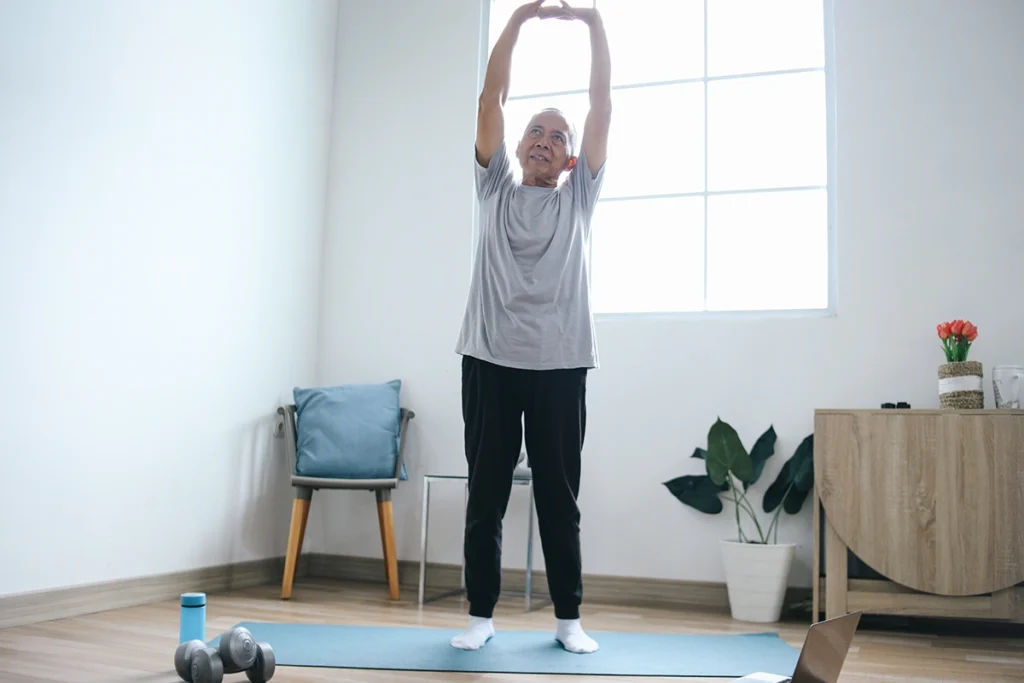
This page is general information, not a personal plan. It has not been written for your body, your history or your diagnosis, and it is not a substitute for being assessed.
Start gently. Stop if the pain sharpens. Mild effort and mild stretch are normal. A sharp, spreading or new pain is a signal to stop and ask someone.
If you are recovering from surgery, a stroke or a fall, if you are dizzy or unsteady, or if you are being treated for lymphedema, get a plan from a clinician before you begin. The right movement in the wrong order can set you back.
Anything specific to you starts with a cause-first evaluation, one-on-one with a licensed physical therapist. That is the visit that tells you which of the ideas below are yours and which ones are not.
Stretching for the spine, hips and neck
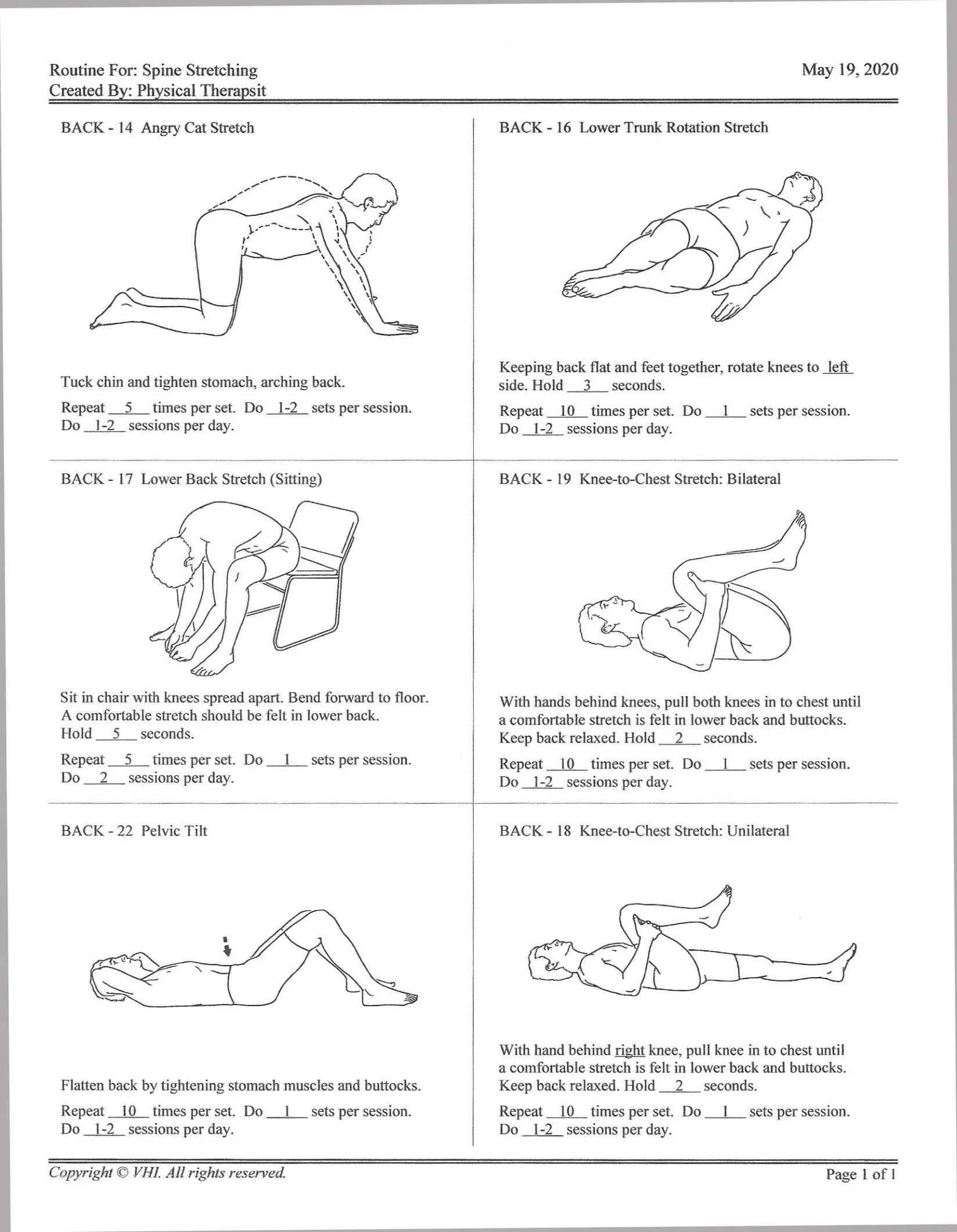
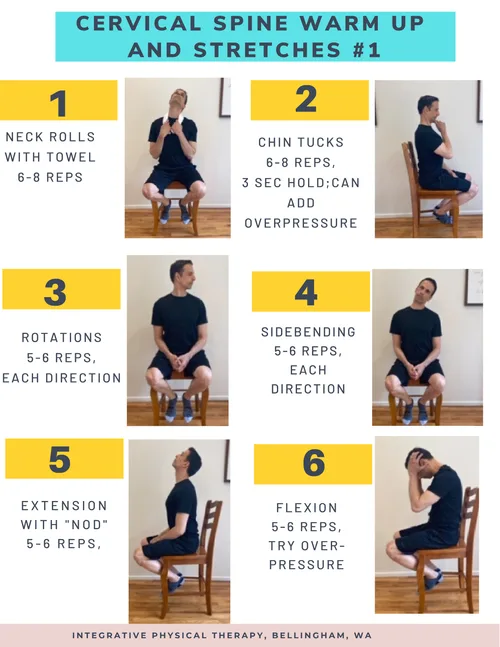
Stiffness in the spine, hips and neck is where a lot of everyday pain actually lives, even when you feel it somewhere else.
Gentle, unhurried stretching can ease that stiffness, help muscles work more efficiently, and take pressure off irritated nerves.
Slow is the whole trick. Move to the first point of tension, breathe, and stay there. No bouncing, no forcing, no holding your breath.
If your symptoms travel down a leg or into an arm, read back pain and sciatica or neck pain before you experiment.
 (opens in a new tab)
 (opens in a new tab)
Exercises for seniors
You’ve spent years doing everything for everyone else. Keeping your own strength is not vanity, it is how you stay in your own house.
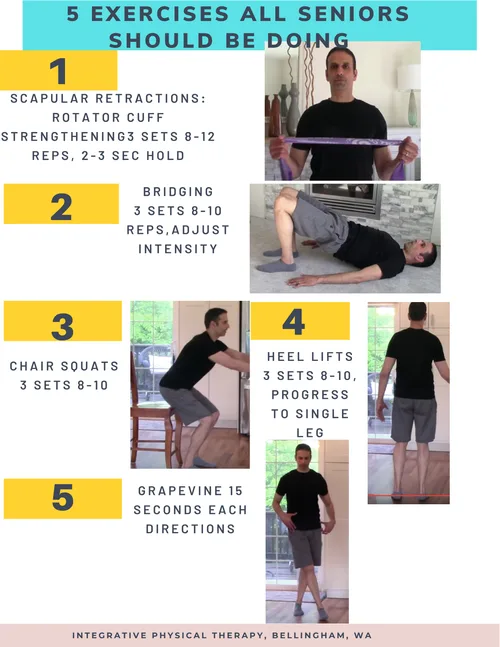
Age is not the reason to do less. It is the reason to do the right things consistently: sit-to-stand from a firm chair, standing heel raises at a counter, gentle hip and shoulder range of motion.
Have something solid to hold. A kitchen counter is better than a chair back, and a chair back is better than nothing.
Related reading: arthritis and fall prevention.
 (opens in a new tab)
Balance techniques
Balance is trainable. It is a skill, and skills come back with practice.
The usual progression is narrowing your base, then reducing what you hold, then closing your eyes, then adding a head turn. Each step gets harder, so earn one before you try the next.
Never practice balance alone if you are unsteady. Stand in a corner or a doorway with a counter in reach, and have someone nearby.
If the room spins, if you have fallen, or if you have started planning your day around not falling, that is an evaluation, not a home exercise. See balance and gait disorders and dizziness and vertigo.
Resistance training

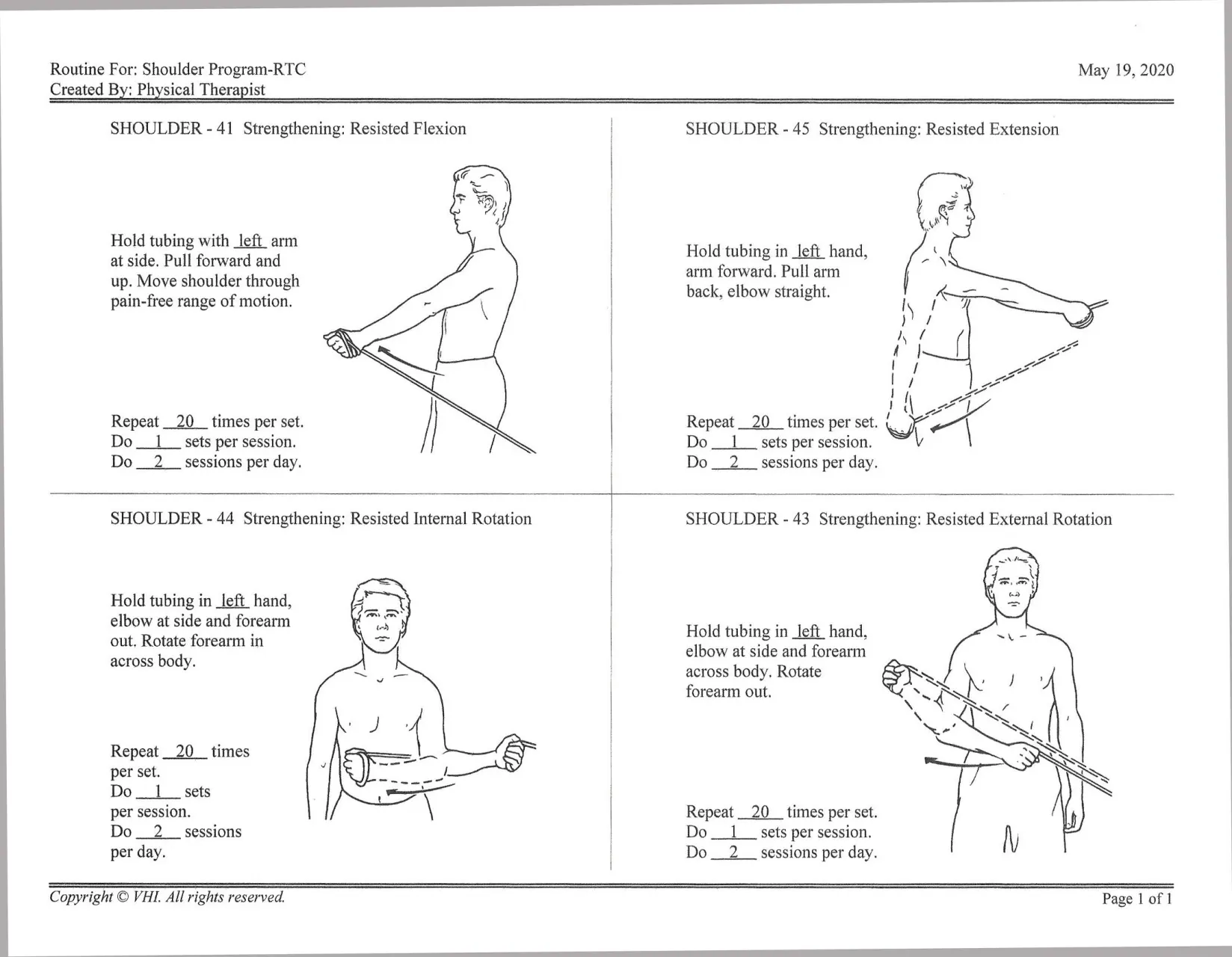
Strength, stamina and endurance in the muscles, heart and lungs are what carry you through recovery from surgery, illness and injury.
They also change musculoskeletal pain. Tissue that is stronger tolerates more of your day before it complains.
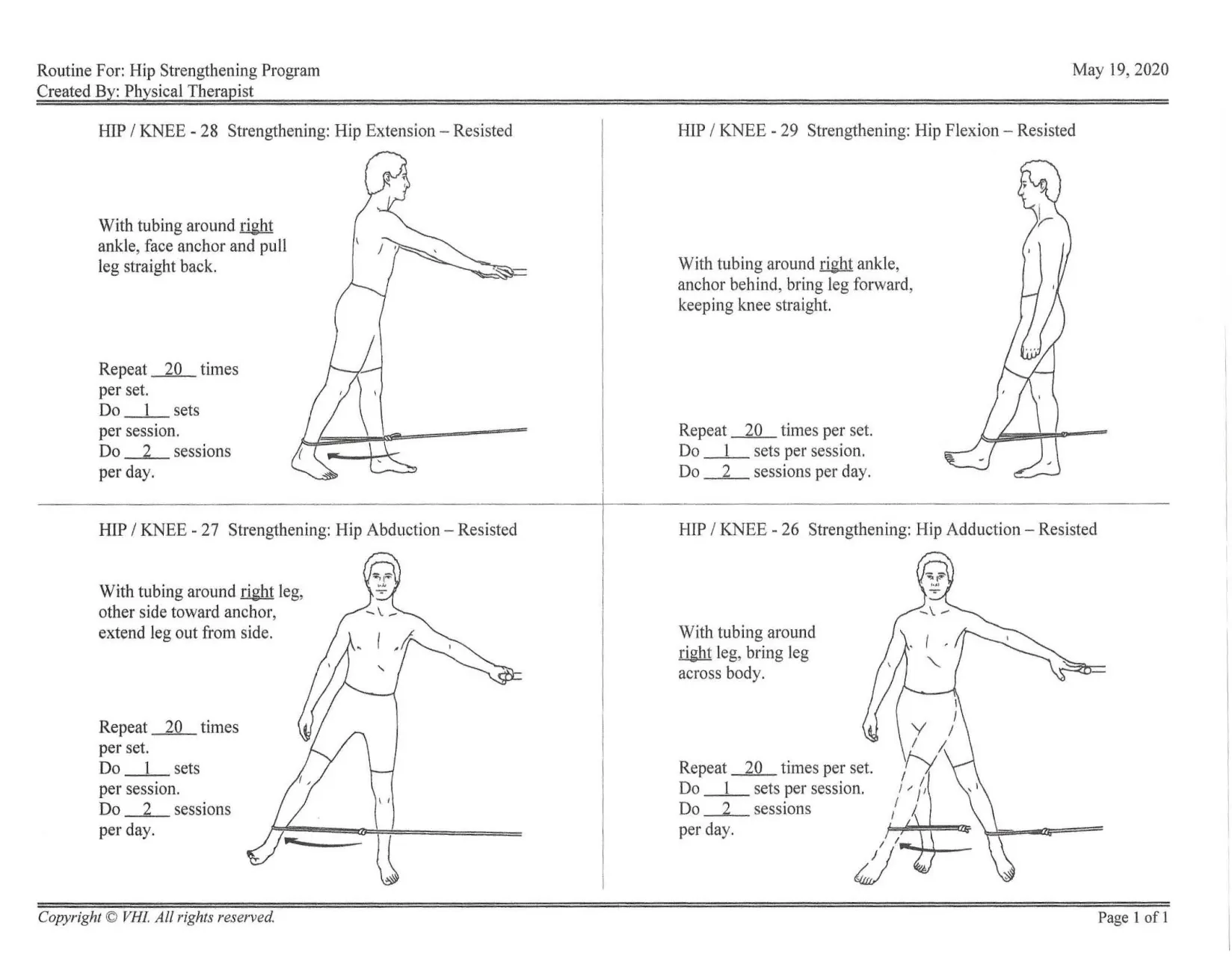
You do not need a gym. A resistance circuit can be built from sturdy household objects, a belt, or the leg of a solid table.
Aerobic work counts too, and walking counts as aerobic work. Build the time before you build the pace.
More on why persistent pain responds to loading, not resting: chronic pain and neuroscience pain management.
 (opens in a new tab)
 (opens in a new tab)
Core and pelvic floor stabilization
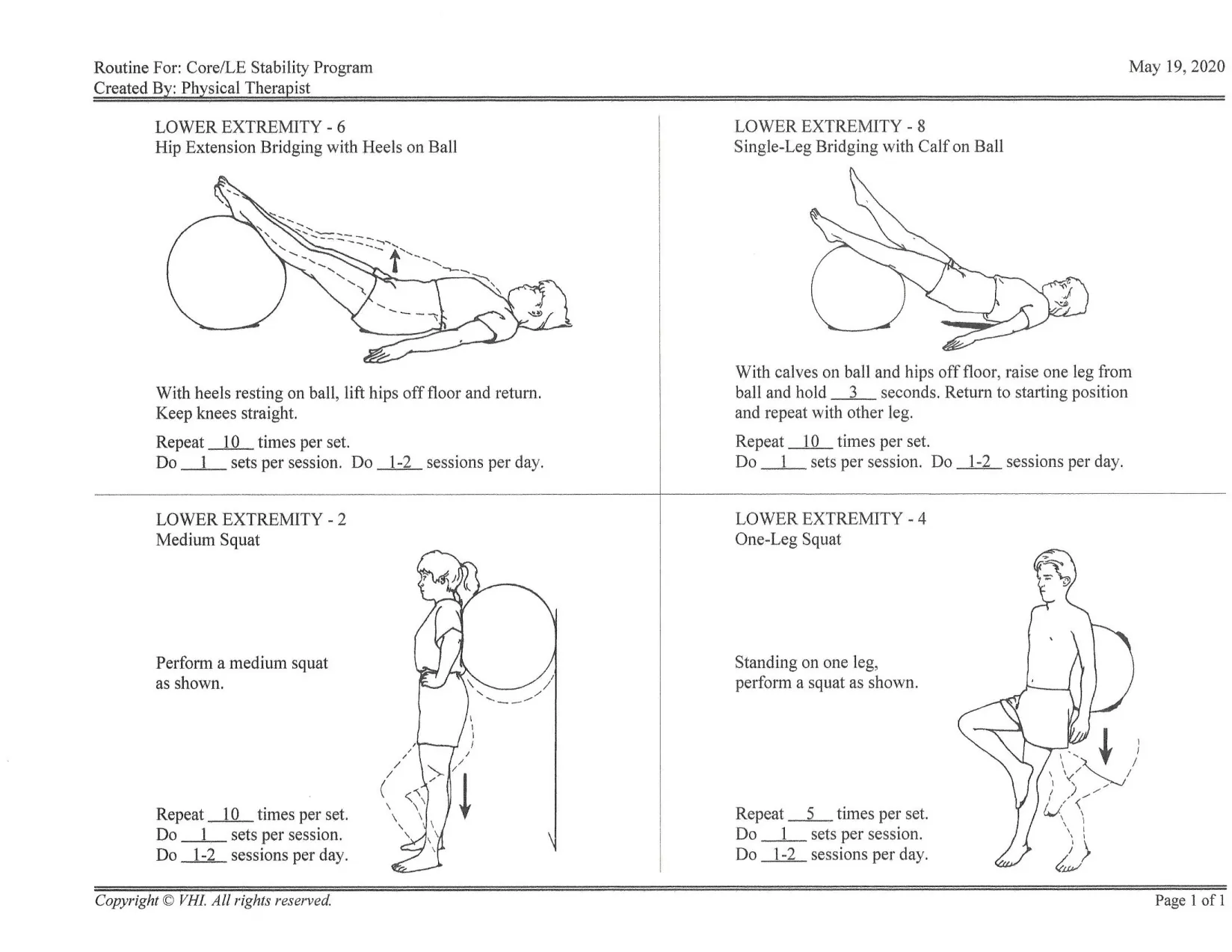
Core training is not sit-ups. It is motor control, teaching the deep muscles to switch on at the right moment without you thinking about it.
That same training includes the pelvic floor, which is why it can help with urinary incontinence as well as with back and hip pain.
Stabilization work asks for a different stimulus than stretching, strengthening or aerobic training. It can usually be done daily, and it should never leave you exhausted.
Low effort, high attention. If you are straining, you have left the exercise and started doing something else.
 (opens in a new tab)
Where this stops being general and starts being yours
Everything above is a starting point. None of it knows why your shoulder hurts, why your balance changed, or why the last program did not hold.
That is what an evaluation is for. We find the cause, tell you how long it should take, and give you the few things that matter for you instead of a printout full of ones that do not.
Nobody regrets starting too early. Plenty of people wish they hadn’t waited.
When you want the version written for your body, request an appointment or get in touch.
Book Your Visit
Ready when you are.
Request a time and a real person calls you back during business hours. No phone tree. No ‘someone will reach out.’ Just a plan.
- Hours Monday–Friday, 9:00 AM–5:00 PM
- (562) 512-3320 Prefer to talk now? Call us.
- No doctor’s referral needed to start
We call back during business hours, Monday to Friday
Step 1 of 5
Request sent.
That’s the hard part done. We’ll call during business hours to lock in your time.
Visit Us
Care this good, this close.
The PT People
- 3300 E South St #203, Long Beach, CA 90805 (opens in a new tab)
- (562) 512-3320
- Fax: (562) 381-7762
- frontdesk@theptpeople.com
- Monday–Friday, 9:00 AM–5:00 PM