
First visits
Pain
Take the weight off.
Gentle Manual Lymphatic Drainage starts guiding fluid out of the swollen limb, so the heaviness and the tightness begin to ease. None of it should hurt.
What We Treat
The sleeve that stopped fitting. The leg that feels heavy by noon. The swelling everyone keeps telling you to elevate. This is a drainage problem, not a willpower problem, and it responds to real hands-on care: Complete Decongestive Therapy, done properly.
Sound Familiar?
Two or more? You’ve been managing this on your own, quietly, the way you handle everything else. You don’t have to. Keep reading.
Why It Happens
Alongside your blood, your body runs a second circulation system: the lymphatic system. All day it collects the fluid that seeps out into your tissue and carries it back. It has no pump of its own. It moves when you move, and it needs clear routes through the vessels and the nodes. When part of that route is damaged or removed, after surgery, after cancer treatment, after an injury, or because of a circulation problem, the fluid still arrives. It just can’t leave.
So it collects. That’s the heaviness, the tightness, the swelling that doesn’t go down overnight. Lymphedema is a chronic condition, and being honest about that matters: the goal isn’t to make it disappear. The goal is to move that fluid out, keep it out, and hand you the skills to run that yourself. Elevation and a garment alone rarely do it. Trained hands and a real plan do.
The Honest Truth
Nobody regrets starting too early. Plenty of people wish they hadn’t waited.
How We Fix It
Lymphedema is managed, not cured. So the endpoint here isn’t the end of the condition. It’s the day you can run your own programme and know exactly when to call us. One-on-one with a licensed physical therapist, every visit.
First visits
Pain
Gentle Manual Lymphatic Drainage starts guiding fluid out of the swollen limb, so the heaviness and the tightness begin to ease. None of it should hurt.
The decongestive phase
Prime
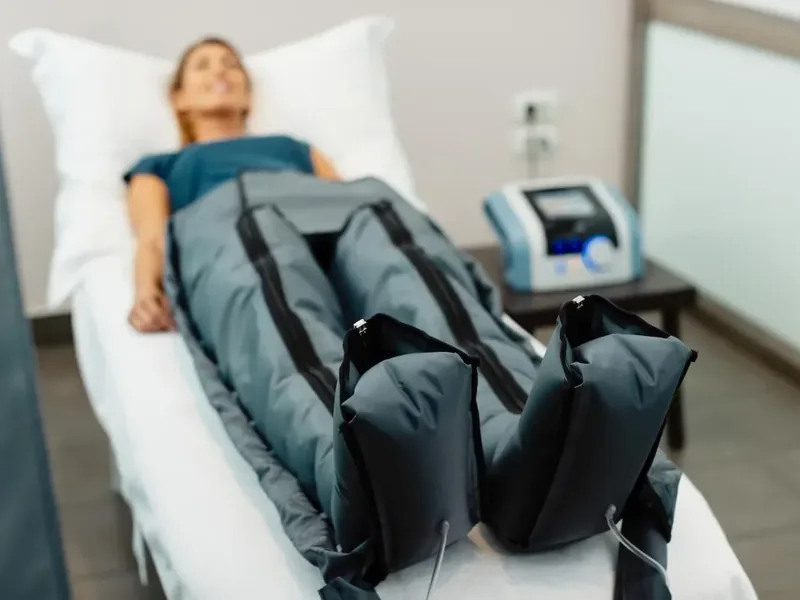
Complete Decongestive Therapy is the full standard of care: drainage, Short-Stretch Bandaging, decongestive exercise and skin care, all working together while the limb comes down. Every part of it happens here, in one building.
Building independence
Perform
You learn the exercises that pump fluid while you move, how compression is meant to feel, and how to look after the skin. This is the part that makes you independent.
Maintenance, ongoing
Prevent
You finish with a maintenance routine that belongs to you: your compression, your movement, your skin checks, and a clear line back to us when something changes. That’s the endpoint here. It’s yours, not ours.
Questions, Answered
No. Manual Lymphatic Drainage is light and slow, closer to a gentle stretch of the skin than a massage. Short-Stretch Bandaging should feel supportive, never tight or painful. Feeling unsure at the first session is normal, and your therapist adjusts the pressure and the layering to your comfort. You say when something isn’t right, and it changes that visit. Wear loose, comfortable clothing that gives easy access to the swollen area.
Often, yes. Under the 2013 Jimmo Settlement Agreement, Medicare is obliged to cover skilled therapy that maintains a condition or slows decline, not only therapy that improves it. For lymphedema, that distinction matters a great deal. We accept 14 insurance plans and we check your benefits before you start, so you know where you stand before the first session, not after it.
The decongestive phase is the intensive part, and as a general guideline 2–3 visits a week for 4–6 weeks is what gets the most out of care. That’s a guideline, not a promise, and you’ll know where you stand at the end of visit one. Sessions run 30–60 minutes. After that, care steps down to a maintenance routine you run yourself. No referral needed to start: California Direct Access lets you attend for up to 45 days or 12 visits, whichever comes first, before a physician sign-off is needed.
Book Your Visit
Request a time and a real person calls you back during business hours. No phone tree. No ‘someone will reach out.’ Just a plan.
We call back during business hours, Monday to Friday
Step 1 of 5
That’s the hard part done. We’ll call during business hours to lock in your time.
Visit Us